Expressive Techniques in Body Art for Stage Performances
Color, Contrast, and Light
Stage lighting exaggerates some hues and swallows others, so expressive body art thrives on purposeful contrast. Embrace saturated primaries, grounded neutrals, and tested palettes under warm tungsten and cool LEDs. Try swatching color wheels backstage, then ask your lighting designer to run cues while you assess readability from various seats.
Brushwork, Airbrush, and Gesture
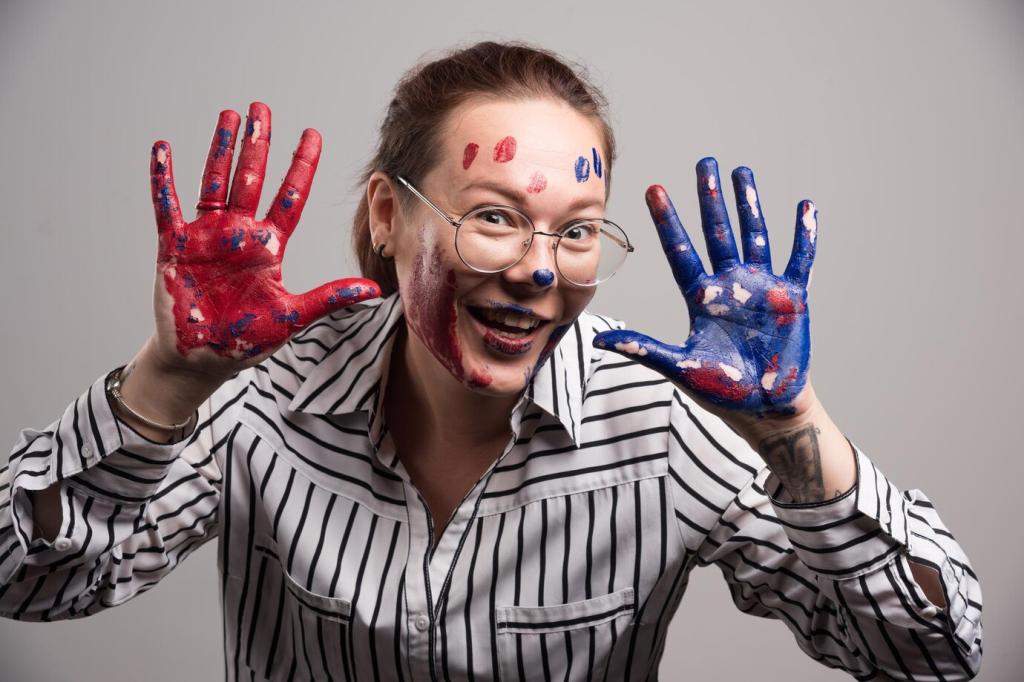
Expressive marks carry emotion—flicks for urgency, soft gradients for vulnerability, bold blocks for authority. Mix brushwork’s tactile energy with airbrush veils that contour muscles and extend lines of choreography. Practice timed drills to build muscle memory, then film rehearsals to confirm your gestures remain legible when bodies turn and sprint.
Negative Space and Silhouette
Strategic emptiness amplifies meaning: reserve bare skin to carve shapes that echo costume lines or a character’s inner conflict. Train your eye on silhouette from thirty meters away, testing under haze and side light. When the body pivots, the unpainted areas should reveal new angles of story, not visual noise.
Storytelling and Symbolism on Skin
Choose motifs that serve the plot: fractured geometric lines for a character splintering, looping vines for resilience, gold leaf for hard-won dignity. Place them where movement reveals beats—wrists for choices, clavicle for vulnerability. Invite readers to comment with a motif they’d assign to a character they love, and explain why.
Lighting, Distance, and Theatrical Illusion
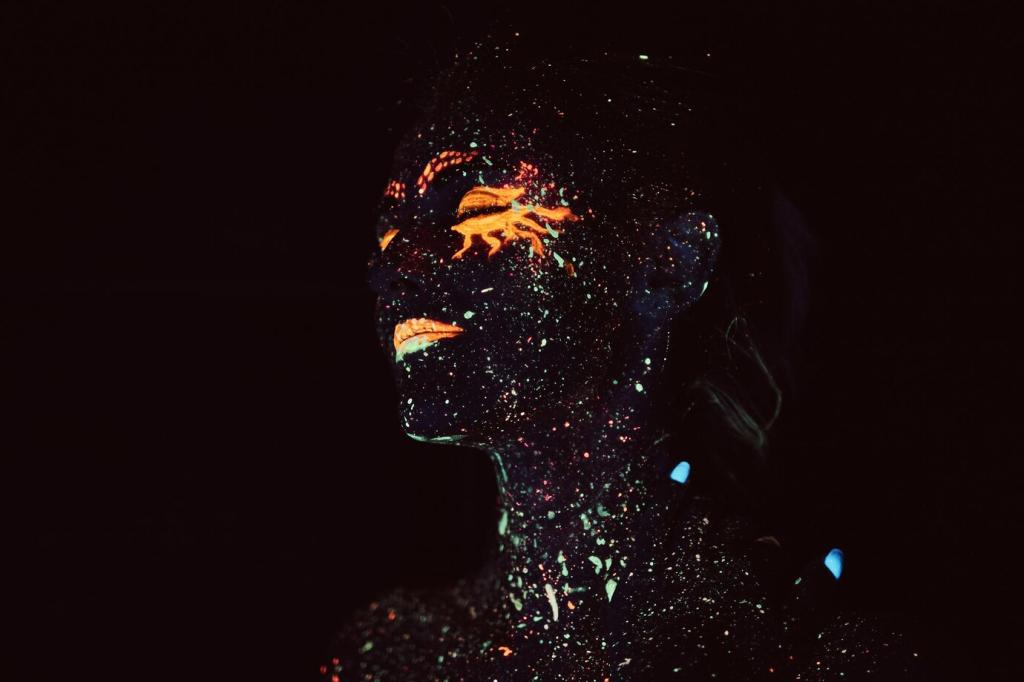
Under ultraviolet, hidden narratives glow to life. Layer invisible inks over visible structures so crescendos reveal secret text or celestial trails. Test under practical cue stacks—UV plus haze can dull contrast. Invite readers to share their favorite UV reveal moment from a show that left the audience gasping.
Lighting, Distance, and Theatrical Illusion
What seduces a camera may vanish at distance. Favor bold value steps and simplified shapes for long throws. Map focal points to faces, hands, and joints—the language of expression. Take balcony test photos, zoom out until details blur, and decide what truly needs to read during critical beats.
Safety, Materials, and Skin Health
Patch-test new products well before opening night. Cleanse gently, moisturize lightly, and avoid occlusive oils under long wear. For sensitive zones, use barrier sprays designed for cosmetic application. Document reactions, swap formulas early, and brief your team on the exact plan if an irritation flares mid-run.
Safety, Materials, and Skin Health
Build the exit into the entrance: pair each product with a removal method that protects the acid mantle. Use cosmetic removers, lukewarm water, and patience—no harsh scrubbing. Post-show, apply soothing hydrators and encourage performers to log any tightness, redness, or sting for future adjustments.
On a foggy Thursday, a painted river motif disappeared under cold top light. We pivoted at break, deepening mid-tone blues and adding silver flickers at key joints. In the evening show, every turn flashed water, and a balcony patron later wrote, “I felt the current from row Z.”